Amy Chan

Amy Chan

In-venue Programme

Date
6 March 2026 (Fri) 7:30pm
Venue
Louis Koo Cinema, Hong Kong Arts Centre
Note

Conducted in Cantonese; Sharing sessions: Hong Kong Sign Language interpretation available

Accessibility Services
25
Sharing sessions: Hong Kong Sign Language interpretation available

In-venue Screening

Online Screening

#ffffff 0
About the Project

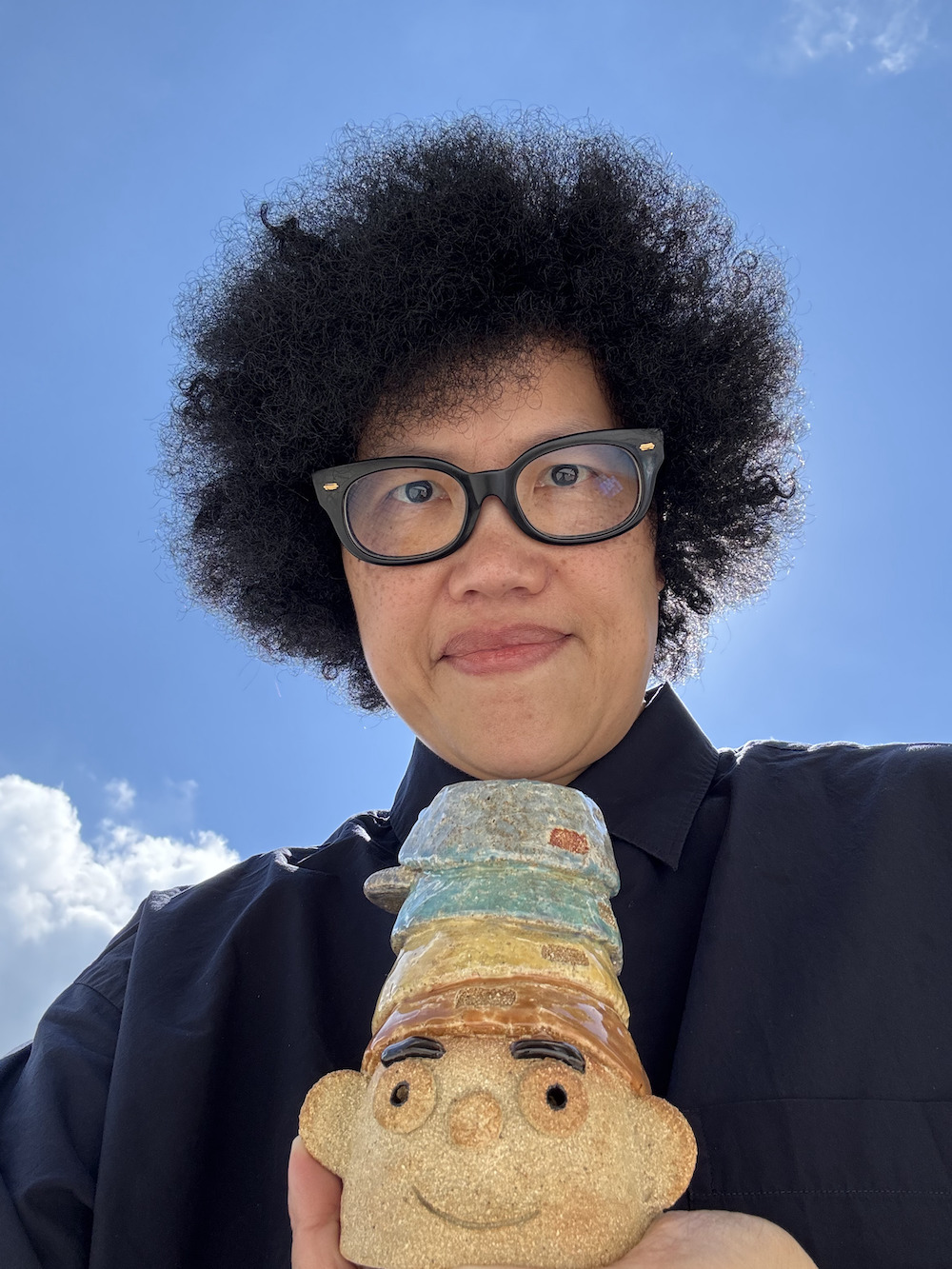
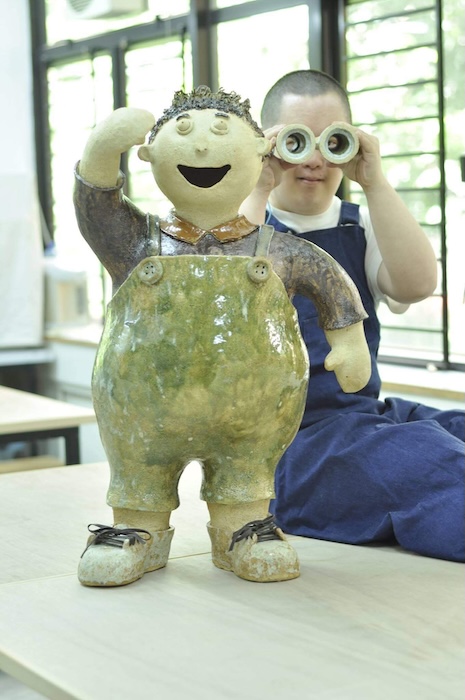
Cross-disciplinary light artist Amy Chan, who has two copies of chromosome 21, and artist Chu Bo-wo, who has three, are no strangers to collaboration as they have worked together on ceramic art. “Bo-wo is my little master, having taught me so many techniques,” Chan remarks.

In this research project, she continues her contemplation on the nature of humans, embarking on a journey of artistic co-creation with Chu Bo-wo. By combining contemporary performance light art with ceramic work, they explore and break down the boundaries and connections that Down syndrome has with medicine, art, and society.
#ffffff 0
Artist Interview

Let the creative process redefine "individual"

#ffffff 0
1. What is the collaborative direction and creative concept for this research?

In our previous collaborations, I discovered that beyond his talent in ceramics, Bo-wo is also gifted in painting, visual arts, and performance art. It occurred to me that his ceramic works alone may not fully reflect his artistic abilities. We often understand an artist solely through their finished pieces, but this time I want to document Bo-wo’s thoughts and ideas—as he doesn’t always find it easy to put them into words, I want to show, through the creative process itself, how he realises artistic ideas through daily life and pursues beauty, thereby reflecting on the nature of artistic creation.

As someone with Down syndrome, Bo-wo has characteristic facial features and is often labelled because of them. People tend to understand him—and others like him—through specific perspectives and frameworks. I hope this work can break down these everyday frameworks—whether medical, historical, anthropological, or political—helping us rediscover a space for the individual and the lived experience in his unique daily life.

#ffffff 0
2. As both a pathologist and a light artist, how do these dual roles influence your creative philosophy?

I work in histopathology, which involves daily microscopic observation of cells. In a way, it is also an experience in light art. Examining tissues through light is, in many ways, identical to practising light art. I feel fortunate to navigate between these two fields. Artistic creation allows me to understand humanity beyond the realm of medicine, while my medical experience enriches my imagination in art. The two have long been inseparable, allowing me to explore humanity from different perspectives.

#ffffff 0
3. The two of you initially conceived a collaborative installation using incandescent bulbs and ceramics. How do these media reflect the research concept?

We began with media we were familiar with, but we both love cross-media creations. During the process, we kept exploring various media, such as painting together. The sense of time and space has, in fact, evolved into a theatrical performance. In the past, we focused solely on the completed artwork, but the “act” of creation is equally significant. I believe the “act” of creation itself can redefine our imagination of an individual and transcend societal frameworks. I hope this creative process can “be seen”.

#ffffff 0
About the Artist
#ffffff 0
Has Border
False
Image
Picture of Amy Chan

Amy Chan 

Amy Chan is recognised as“an exciting practitioner”and“an emerging critical voice on light as a performance material”by the UK journal Theatre and Performance Design. She works in the intersections of light, music, theatre, installation, and arts-medicine. Her cross-disciplinary practice includes collaborations with international artists, and showcases at M+ and Art Basel. Chan is also a long-term artistic collaborator with St. James' Creation.

Photo
Photo Session: Amy Chan 1
Photo Session: Amy Chan 2
Has Border
False