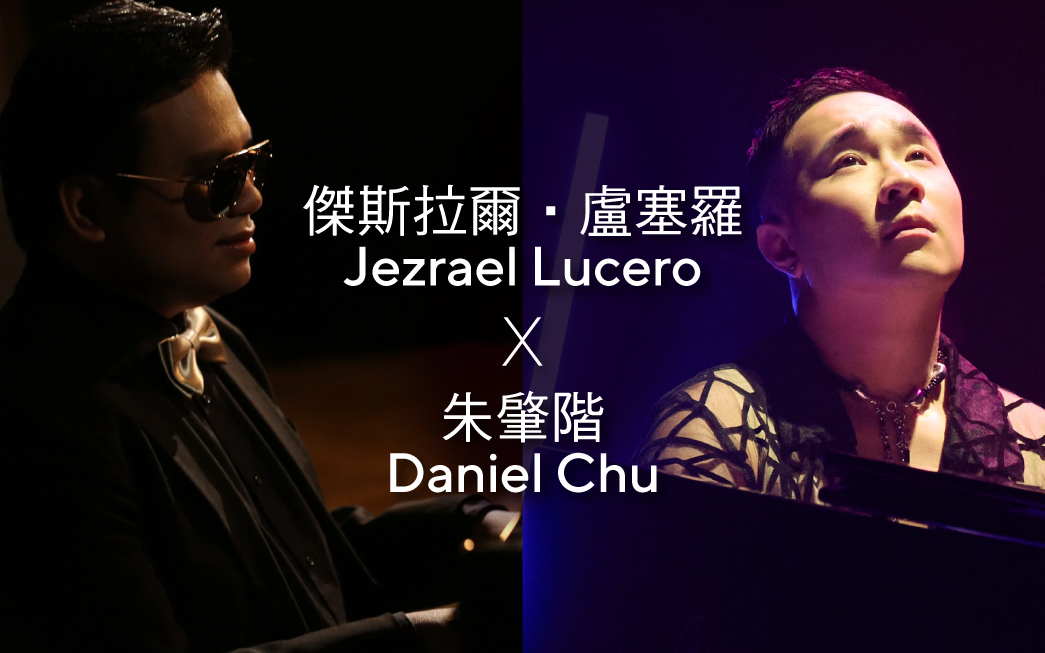
Jezrael Lucero ✕ Daniel Chu

Jezrael Lucero ✕ Daniel Chu
In-venue Programme

Date
5 March 2026 (Thu) 8pm
Venue
The Dairy, The Fringe Club
Note

Conducted in English with Cantonese interpretation; Sharing sessions: Hong Kong Sign Language interpretation available

Accessibility Services
25
Cantonese interpretation available; Sharing sessions: Hong Kong Sign Language interpretation available; guide dogs welcome.

In-venue Screening

Online Screening

#ffffff 0
About the Project

Imitation Through Listening, yet Never Mere Repetition

Jazz pianist and ethnomusicologist Daniel Chu engages in a candid conversation with Jezrael Lucero, a blind Filipino jazz musician based in Hong Kong. Their dialogue explores Lucero’s learning process, ways of thinking, and techniques in jazz improvisation from a musical perspective. Through an anthropological lens, the dialogue delves into various facets of Lucero’s life in Hong Kong as a blind Filipino jazz musician—how does he navigate the city? How do his intersecting identities—blindness, being non-local and being a jazz musician—shape his choices and possibilities?

From understanding how Lucero “sees” the world to the goodness and injustice he has encountered in life, Chu unpacks various preconceptions and even misconceptions about blind musicians. For Lucero, true music has no boundaries, allowing him, despite his blindness, to have no limits.
#ffffff 0
Artist Interview

C: Daniel Chu
L: Jezrael Lucero

#ffffff 0
1. What are the goals of this research and creative project?

C: I have always admired Jezrael’s music. More importantly, his experience has real research value. Coming from the Philippines, he has lived and established himself in Hong Kong while maintaining an active international presence, performing in the United States, releasing albums, and carving out a global reputation as a professional jazz musician. As a fellow jazz pianist, I want to understand how he learns structured repertoire, builds understanding of harmony and develops his tactile sensitivity and “certainty” on the keys despite his blindness. These are experiences I can’t get from other pianists.

L: In Hong Kong, I earn my living as a musician. Frankly, my lack of familiarity with Cantopop sometimes leaves me marginalised. But for me, this research and creative project is not about searching for an identity. Rather, by sharing my story and musical philosophy with Daniel, we become companions on the musical journey. I also want to tell people that if you have a dream, you can achieve it if you are willing to put in the work. Blindness is not a constraint.

#ffffff 0
2. What new discoveries have you made from your conversations? How has Lucero inspired your thinking?

C: For the first time, I witnessed up close how technology supports the daily life and creative work of blind musicians. In fact, by mastering technology, their capabilities not only can match those of sighted people but may even surpass them. Jezrael is very skilled at composing music on the computer. He showed me his creative process, deepening my understanding of how he constructs his musical workflow. What inspired me most was how he learns the jazz language primarily through listening. He never copies jazz phrases from masters verbatim. Instead, he listens, internalises and transforms them into his own sounds—constantly imitating, yet never merely repeating. This pure and steadfast way of learning reveals his incredible perseverance and sensitivity. It has also made me rediscover the importance of “listening” in the jazz language. I gradually developed some new thoughts. For example, jazz music originated in an oral and aural tradition. In a sense, blindness granted Jezrael direct access to this tradition—could this have made his learning more direct? I have also become curious about what it feels like to play long-term without “cannot see the keys”, relying solely on touch: is it more relaxing, or are there moments of tension?

#ffffff 0
3. What do you hope the audience will see and feel Lucero’s solo concert (as the research presentation)

L: Through this project, I hope to spread the message that being blind does not inherently make us learn faster; Rather, sighted people may be distracted by other sensory stimuli. With music, our learning methods are equal— we must all work hard to develop our own musical philosophy and values. To me, all music genres are a way of life. My father taught me: you are not learning a particular “type of music”—you must simply learn wholeheartedly, then understand how to express yourself through music.

#ffffff 0
About the Artist
#ffffff 0
Has Border
False
Image
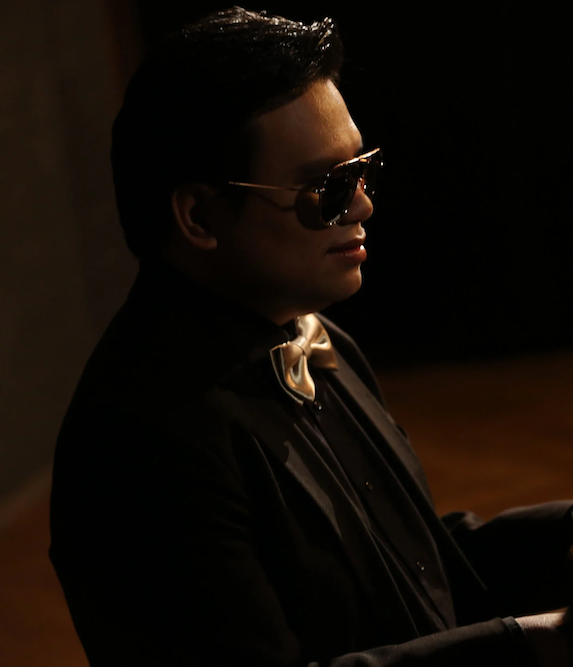
Photo of Jezrael Lucero

Jezrael Lucero

Jezrael Lucero is a Hong Kong-based Filipino jazz musician, singer, pianist, drummer, bass-player, guitarist, arranger and producer. Born utterly blind with perfect pitch, he played his first classical concerto on the piano at the age of two, and has been performing publicly since the age of four. Lucero is a confident master of diverse genres including jazz, pop, soul, R&B, Latin, Cuban and classical, and has collaborated with a number of pop stars including Sandy Lam and Khalil Fong.
#ffffff 0
Has Border
False
Image
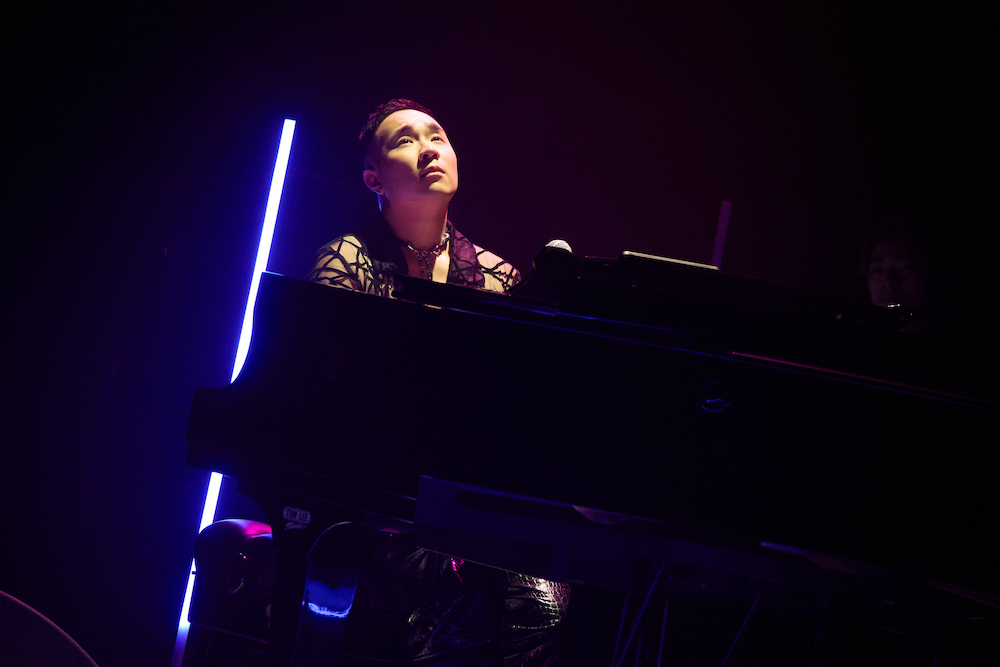
Photo of Daniel Chu

Daniel Chu

Daniel Chu is a pianist, composer, producer and scholar. His performances, blending a jazz sensibility with avant-garde prowess, have been showcased on local and international stages, from intimate jazz venues to major music festivals and coliseum shows. Chu graduated from Berklee College of Music with highest honours at age 20 and holds a Master of Philosophy in Music (Ethnomusicology) from The Chinese University of Hong Kong. 

Photo
Photo Session - Jezrael Lucero and Daniel Chu 1
Photo Session - Jezrael Lucero and Daniel Chu 2
Has Border
False