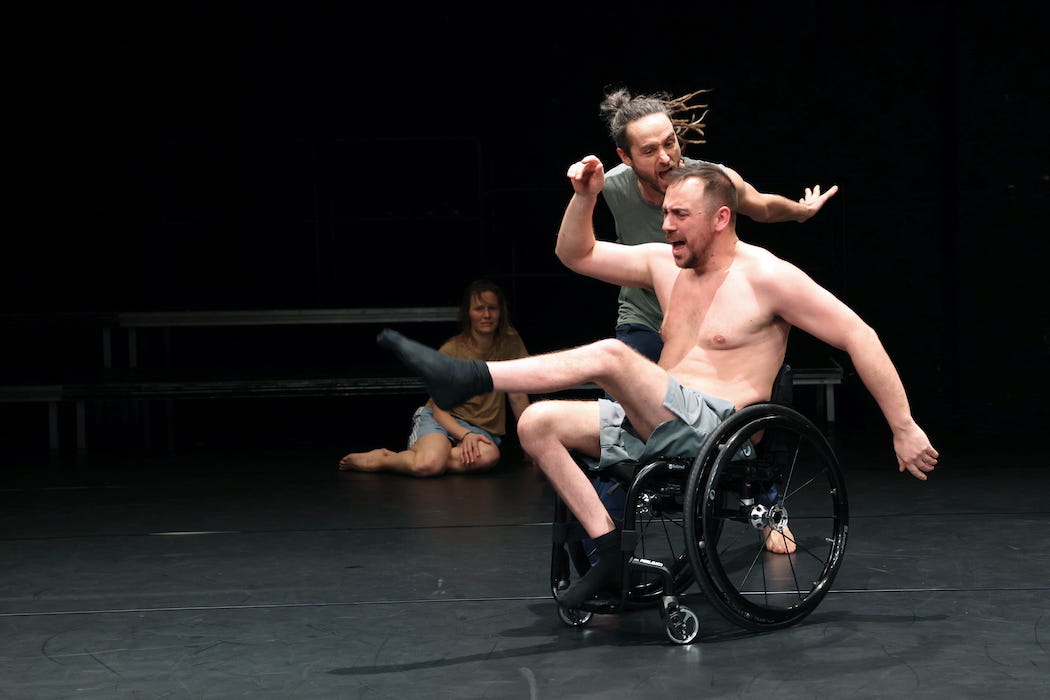
Harmonia by Unusual Symptoms/ Theatre Bremen/ Adrienn Hód

Harmonia by Unusual Symptoms/ Theatre Bremen/ Adrienn Hód
In-venue Programme

Date
21 March 2026 (Sat), 8pm*
22 March 2026 (Sun), 3pm*

*Post-performance Meet-the-Artist
Venue
The Box, Freespace, WestK
Note
  • Approx. 105 minutes with no interval.
  • The performance contains nudity. Individuals under 12 years old will not be admitted.
  • Please switch off all sound-making and light-emitting devices.
  • Unauthorised photography or recording of any kind is strictly prohibited.
Accessibility Services
53
7
3
70
4
Subtitles and accessible captions in Chinese and English, audio description and caption reading in Cantonese and house programme in audio format available

In-venue Screening

Online Screening

#ffffff 0
About the performance

Between Constraints and Liberation, A Dance for Freedom

Harmonia is the first creation by Hungarian choreographer Adrienn Hód for dancers with and without disabilities in 2022. It was honoured as Best Work at the 2023 Rudolf Laban Award in Hungary, and selected for Tanzplattform Deutschland 2024 as one of the ten most representative dance works in Germany for that year. In this dance production that defies definition, mere pulsation and rhythm slowly culminate in a high-powered, free-spirited celebration.

It all begins with some gentle and light stretching.

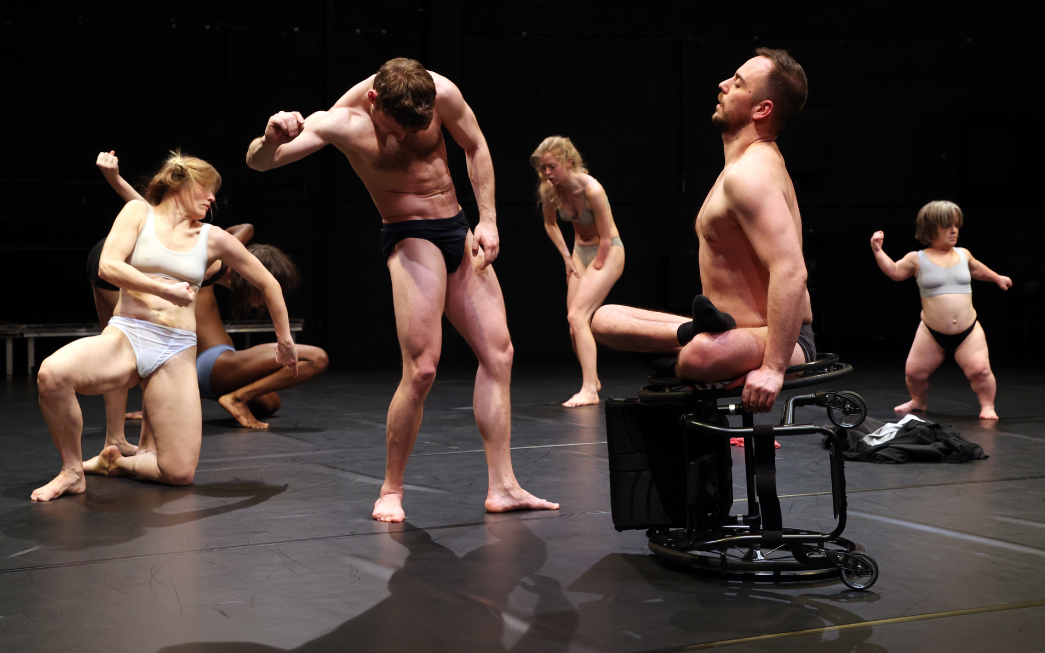
A parade of bodies, so distinct and yet alike, is seen stretching on the floor. With their bodies, ten dancers send silent invitations to the audience, asking for their gaze. The audience cannot possibly resist, as what unfolds before them is even more exposed than nudity. Hód explains the need for warm-up: “This is the purest state which offers so much to see.” The silence is long, testing the audience’s patience. But as long as you keep your mind open, you will start seeing the dancers lean upon and entangle with one another, helping and challenging each other in turn.

Soon after, a rhythm is heard. Is that a heartbeat or just a beat? Willingly or passively, the bodies take turns moving to the beat as if they were driven by a leading melody. From individuals to a community, from uniqueness to oneness, something seems ready to erupt… for a wild celebration in store. One by one, the dancers take centre stage as their most relaxed selves, free from any prearranged steps or emotions. They just let themselves flow with the music as if a new order had arrived.

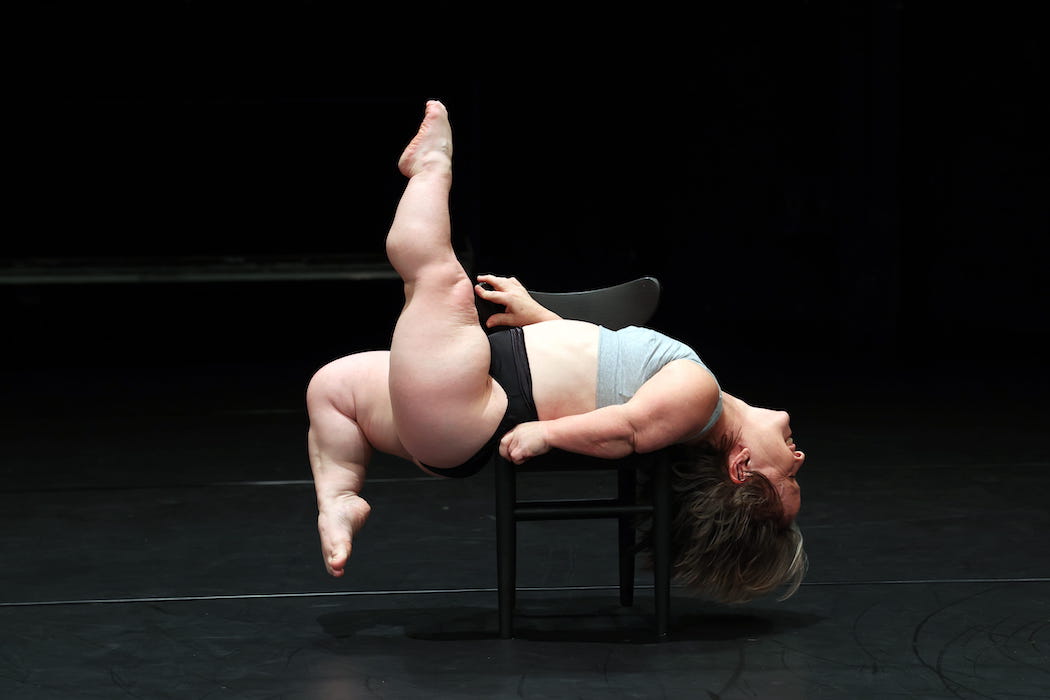
Compared with classical dance, contemporary dance is considered to be more open. However, as the choreographer contends, the latter still has its own conformity such as requirements or preferences for specific body traits. Harmonia brings together a group of professional dancers of varying physical capacities, showing differences and similarities in their most stripped-back forms. In the gap between suppression and freedom, constraints and liberation, they dance fearlessly for freedom. “What is dance? Who can dance? We never cease to challenge all these preconceptions,” notes Hód. 
 

#ffffff 0
Artist Interview with Choreographer Adrienn Hód and Dramaturg Gregor Runge
1. Behold the Body, Sense Time, and Challenge Norms

Harmonia is the second collaboration between contemporary dance group Unusual Symptoms and choreographer Adrienn Hód: “We both want to pursue our take on contemporary dance further.” Dramaturg of Harmonia and Co-Artistic Director of Unusual Symptoms Gregor Runge traces the production back to two aspects of consideration: as a professional contemporary dance company in the establishment with a share of the resources, “how could we initiate change in the existing structure to allow more representations of disabled dancers on stage?” Harmonia is also the first inclusive dance work by their creative partner, Theatre Bremen in Germany. How to make the theatre “fully accessible” is another aspect to consider. Runge’s wish to make changes from within the establishment is, however, a lifelong undertaking: “Maybe let’s start from the artistic side. Let’s create a big piece of dance that involves dancers with and without disabilities, and make the production visible.” With a penchant for challenging the norms, Hód is undoubtedly the ideal choreographer. “She loves ‘non-normative’ physicality, using the human body’s purest flow and flesh to question the established order, always with a shade of defiance,” states Runge.

#ffffff 0
2. Body is Presence, Presence is the Present

“I just follow the way I work – observation comes first,” Hód observes quietly in the rehearsal room. “So warm-up has become an integral part of the performance. It carries a lot of information.” Harmonia opens with a period of stretching at its most basic. “Every morning during the rehearsal, when dancers arrived and began stretching their bodies, I would watch in silence. I love seeing people starting to concentrate and give themselves to their physicality, using and comprehending their bodies attentively.” The dancers’ individualities are evident even when they do nothing, she adds. A body in the present moment is already a sight to behold.

Warm-up is like a liminal state between being and not being watched. During the performance, dancers start off by doing warm-up on their own before forming pairs and contacting each other physically. Hód says: “Contact between bodies is the most intriguing connection. What the audience sees is somewhat like ‘creation’ or otherwise, all beyond definition.” There seems to be a sort of contention when dancers are being drawn to each other, but sometimes it is nothing but the tenderest form of comfort. The audience may find themselves asking: What is that? Something seductive? Pushing the body’s limits? The audience’s imagination can well be a kind of selfawareness. “As a dramaturg, I always keep digging for materials and exploring. But it all goes back to first creating ‘encounters’, which make possible the relationships dancers build with each other and with the space they are in.”

#ffffff 0
3. Experience Time to Challenge Hidden Taboos

While “encounter” is the starting point, Hód and Runge do not stop at the dancers but extend their reach to the audience. The performance opens with a warm-up that lasts for almost an hour, an attempt to give the audience a sense of “time” and subvert the popular perception of contemporary dance. “The longer the time, the more the audience will imagine and interpret. Such ambiguity is important,” Hód elaborates. This is accentuated as all the lights are on, and audience members can see each other in addition to the performers. Such “freedom” could be scary for some. “Watching dancers of all ages and body types reveal—without holding back—their physical and mental states is like confronting certain taboos. The audience cannot help but doubt: ‘Am I supposed to watch?’” Taboo might be an exaggeration; no one is a voyeur here, but watching seems like overstepping the boundary, making one blush. “I wish to invite the audience to experience a different sense of time,” Hód remarks.

#ffffff 0
4. Communication Builds Trust Beyond Barriers

While preparing for Harmonia, Hód started from improvisation and physicality, asking dancers to mobilise their bodies in unconventional ways so that they could learn how to transform and transcend. Leisa Prowd is one of the disabled dancers. Throughout the journey, what matters most to her is the process where dancers, from complete strangers, gradually developed mutual understanding through communication: “Hód encouraged us to push our limits with some really inspiring and even provocative suggestions. Yet her purpose is not that we achieve them, but to see how the dancers interpret them.”

Once every week, the dancers would sit down to share their thoughts. “We explore how to mobilise our bodies, where we put our core or focus, and where our weakest points are. That is how we communicate, and from day one, communication has always been the biggest challenge. Some of the dancers are six feet tall, but I am just the same height as a six-year-old. It is hard for me to tell them, ‘I am not going to break; you can give me your weight,’ and so on—without using words but only my body. Yet this is what inclusion truly means because the creative process begins with ‘who we are’, from our sheer flesh and blood,” says Prowd.

#ffffff 0
5. The Unbearable Weight of Life and Its Subsequent Release

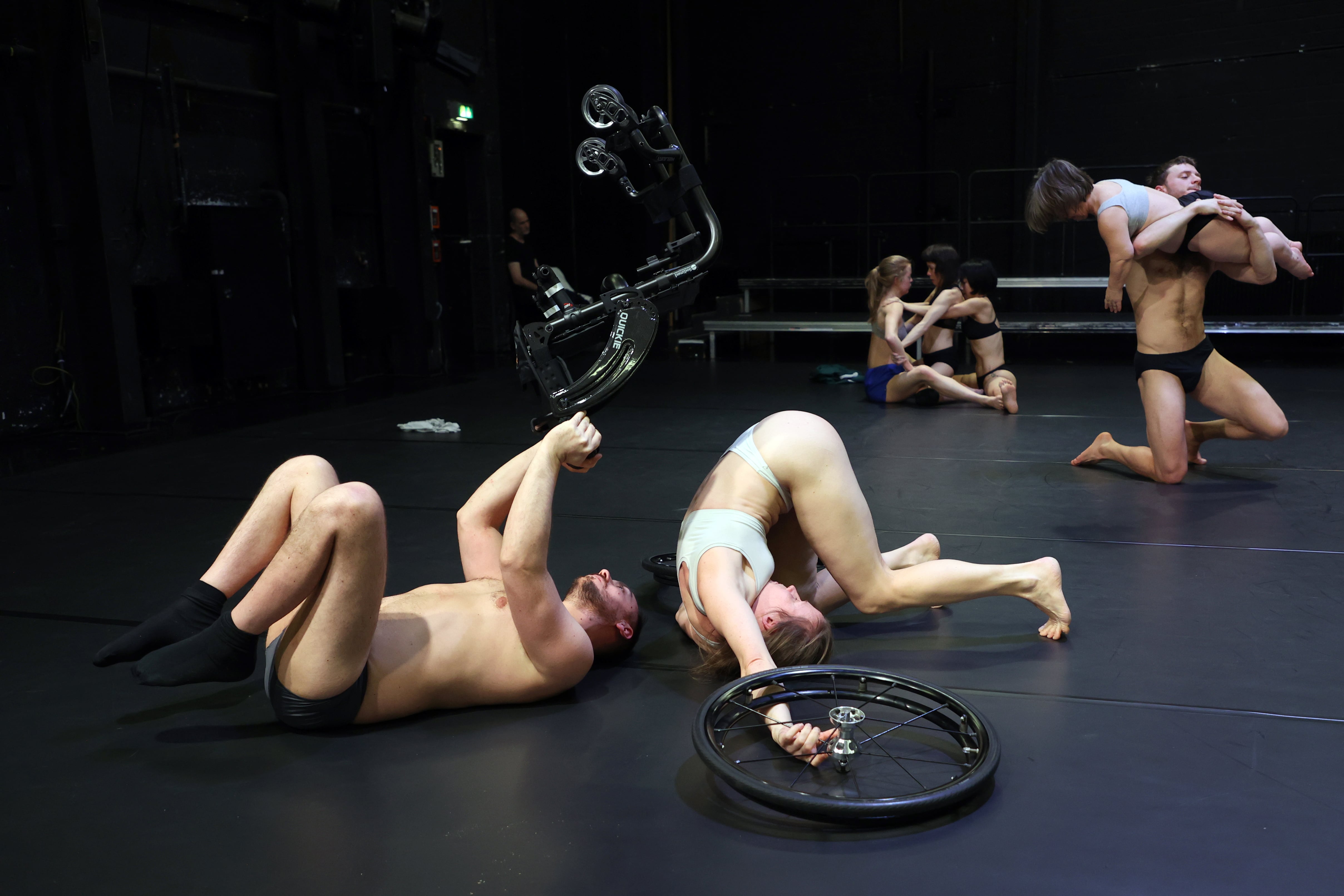
As stretching ends, the second part breaks open. A heavy and strong pulse is heard, spurring the dancers on to move—their skin, muscles and bones in a whirlwind of motions. Runge says: “Against the pumping beat, the audience sees both the dancers’ uniformity and individuality. As the beat accelerates, their moves become more repetitive and vigorous as if there were a system unifying them. It feels like getting everyone ready—the dancers receiving new information and discarding the old, and the audience staying The Unbearable Weight of Life and Its Subsequent Release glued.” It all becomes so intense, to the point where no one can stand it any longer... until everything falls apart. Prowd says: “Once again, we are asking the audience to endure for a while longer. The moment we have gone all out on the floor, liberation finally dawns. I do not fancy the word ‘equality’—it is more like a celebration.”

This final celebration is a parade of solos by all the dancers. Their personalities and joy are there for all to see. Hód says: “By then, all eyes and gazes have become equal. Everyone celebrates for each other’s body—abled or disabled.” One dancer’s strength ignites the other, but no one has to copy or follow on this platform of interaction and exchange, where one soaks up what belongs to someone else before turning it into something entirely theirs, showing what they own in the most carefree moment that is here and now. “I feel sad about those among the audience who could not stay till the end. They will be missing out on the best moments of the show,” notes Prowd.

Harmonia is a creative endeavour by Hód to challenge notions of the body, contemporary dance, societal framework and the establishment. To this end, time is the very means of defying the norms. “Contemporary performances go for efficiency and speed, but what is worth pondering is that we must afford time for the ‘process’ itself,” she concludes. 

#ffffff 0
About the Artist
#ffffff 0
Has Border
False
Image
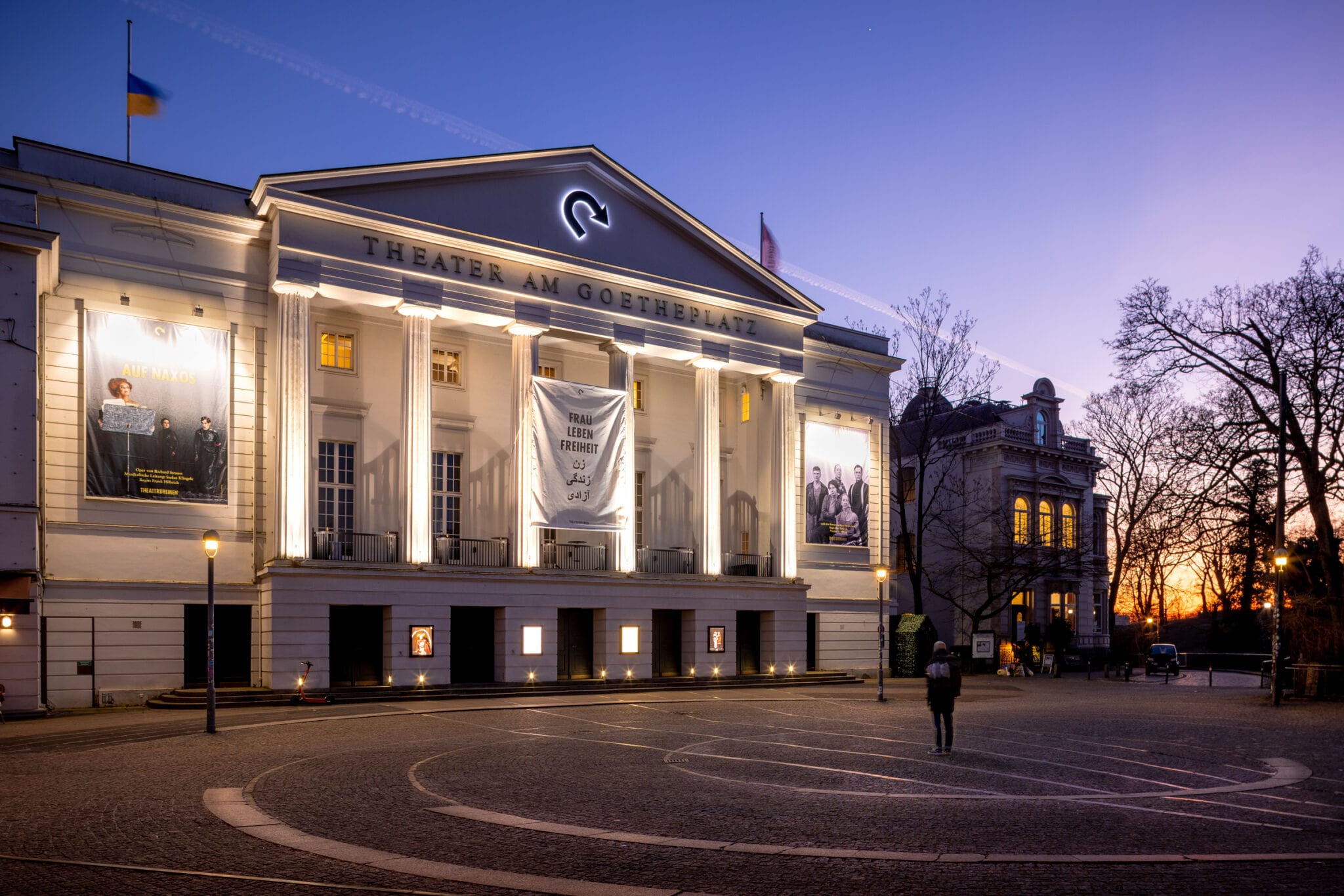
Photo of Theatre Bremen

Theatre Bremen

Theatre Bremen serves as a public space for aesthetic and political reflection on the challenges, risks and moments of freedom of the modern urban experience. The Theatre comprises four departments: music theatre, drama, dance, and children's and youth theatre. Each season, it stages over 30 premieres and 600 performances, alongside a rich programme of concerts and events as part of its commitment to direct dialogue with the audience. Theatre Bremen also develops residence companies, including Unusual Symptoms, and collaborates with internationally acclaimed artists, companies and festivals.
#ffffff 0
Has Border
False
Image
Photo of Unusual Symptoms

Unusual Symptoms

Unusual Symptoms has been the dance company of Theatre Bremen, Germany since 2012. Originally founded by the French-Algerian choreographer Samir Akika, the ensemble has worked under the artistic direction of Alexandra Morales and Gregor Runge since 2018, and with renowned and up-and-coming international choreographers such as Faye Driscoll, Renan Martins, Michikazu Matsune and Adrienn Hód. Unusual Symptoms also develops projects with young performers, and have performed multiple times at the renowned Tanzplattform Deutschland.
#ffffff 0
Has Border
False
Image
Image of Addrienn Hod

Choreographer
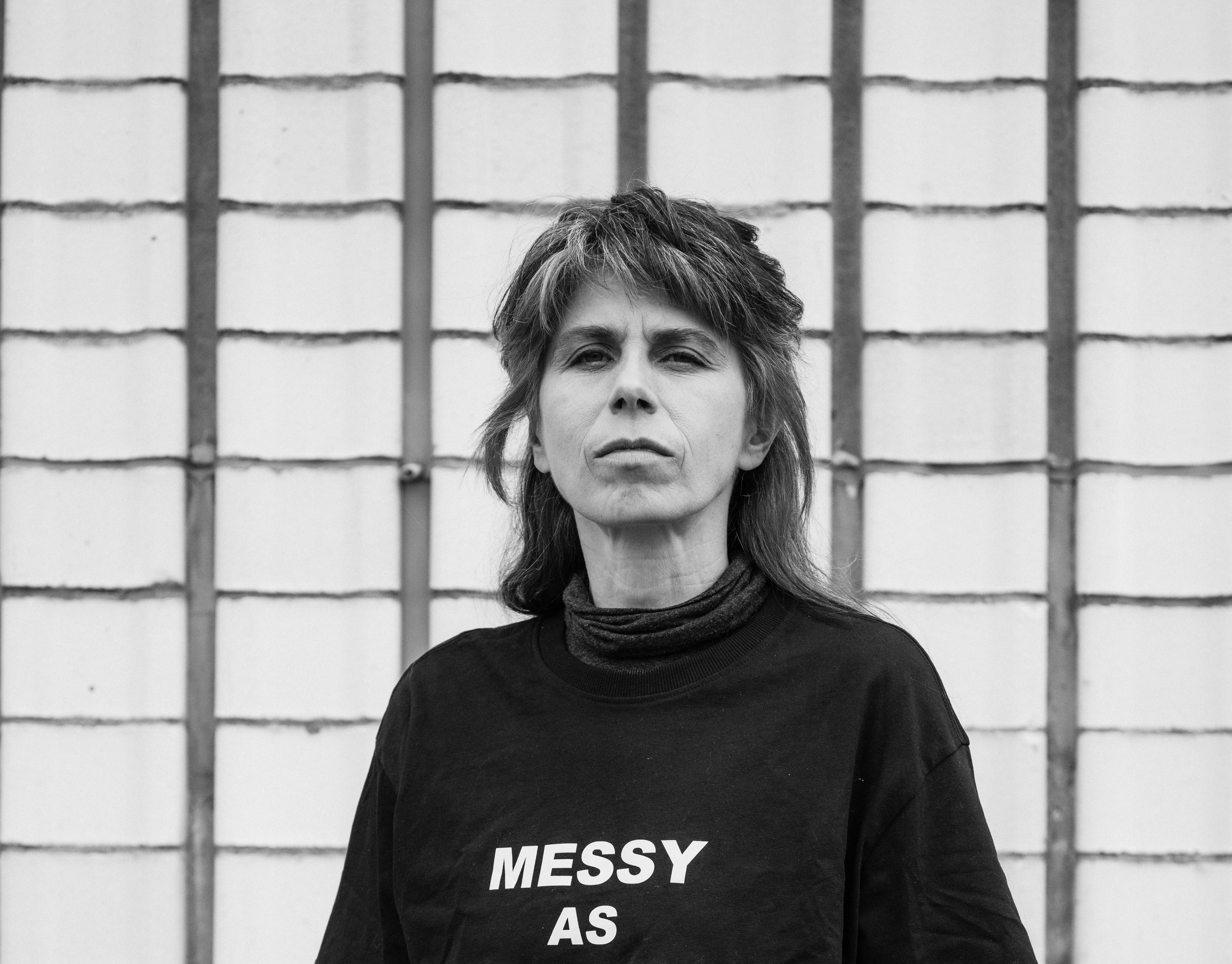
Adrienn Hód

Adrienn Hód is an internationally acclaimed choreographer specialising in contemporary dance and experimental movement. Her permanent company is HODWORKS, of which she has been artistic and production director since 2007. In addition to her work with the company, she also choreographs for other Hungarian and international collaborations. She is also an applied choreographer for theatre productions, films and commercials. She regularly teaches on both Hungarian and international platforms, where she works with improvisational tools. Her work is focused on the human physique in motion, stripped of taboos and prejudices, removed from its cultural context.

Creative and Production Team
The table of Creative and Production Team
Position Team Member
Produced by Theatre Bremen
Co-Creation Yanel Barbeito, Carolin Hartmann
Choreography Adrienn Hód
Artistic Collaboration Csaba Molnár
Music Ábris Gryllus
Stage & Costume Design Anna Lena Grote
Lighting Design Christian Kemmetmüller
Dramaturgy Gregor Runge
Dramaturgic Advisor Ármin Szabó-Székely
Production Management Alexandra Morales, György Ujvári-Pínter
Production Assistance Emily Masch, Andy Zondag
Assistant to Stage & Costume Designer Naomi Darleen Schade
Stage Manager Lena Maire
Performed by & with Aaron Samuel Davis, Florent Devlesaver, Gabrio Gabrielli, Paulina Porwollik, Leisa Prowd, Tamara Rettenmund, Nora Ronge, Andor Rusu, Young-Won Song, Károly Tóth
Photo
Photo Session - Harmonia 1
Photo Session - Harmonia 2
Photo Session - Harmonia 3
Photo Session - Harmonia 4
Photo Session - Harmonia 5
Photo Session - Harmonia 6
Photo Session - Harmonia 7
Photo Session - Harmonia 8
Photo Session - Harmonia 9
Has Border
False