Precarious Moves by Michael Turinsky

Precarious Moves by Michael Turinsky
In-venue Programme

Date
17 March 2026 (Tue), 8pm*
18 March 2026 (Wed), 8pm*

*Post performance Meet-the-Artist
Venue
The Box, Freespace, WestK
Note
  • Approx. 75mins with no interval
  • Performed in English
  • Please switch off all sound-making and light-emitting devices.
  • Unauthorised photography or recording of any kind is strictly prohibited.
Accessibility Services
53
7
3
70
4
Subtitle and accessible captions in Chinese and English, audio description in Cantonese, caption reading in Cantonese, and house programme in audio format available

In-venue Screening

Online Screening

#ffffff 0
About the performance

Dismantling Dance — Resistance through Precariousness

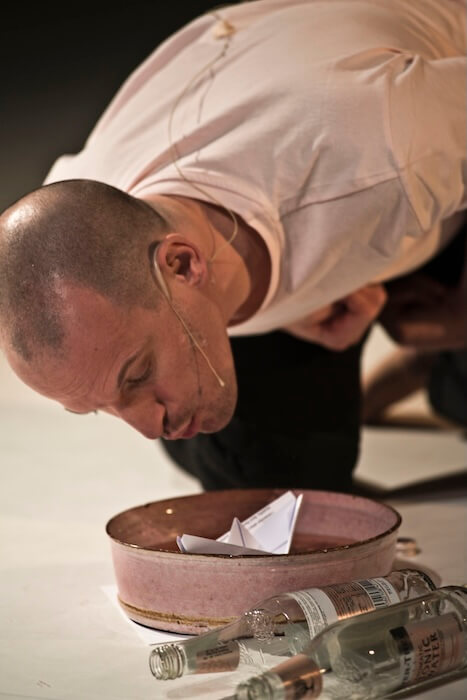
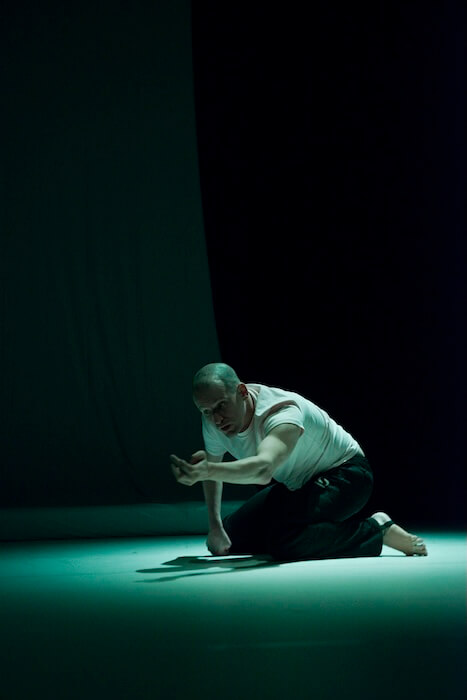
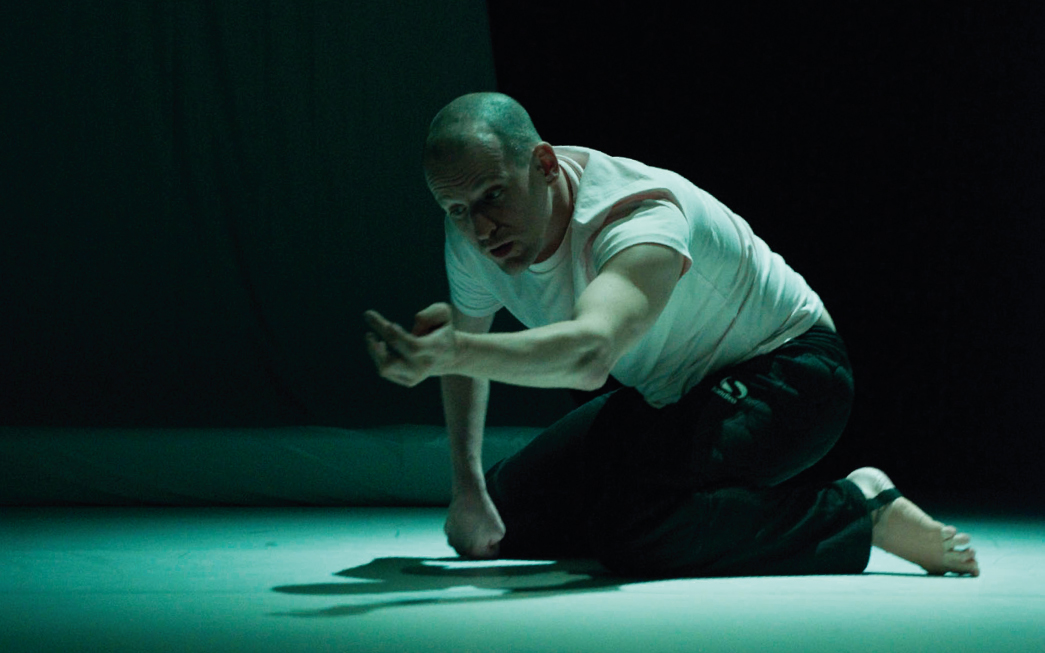
Precarious Moves is a dance theatre production combining physical movement with philosophical reflections. Austrian artist and theoretician Michael Turinsky, as an artist with disabilities, utilises his body to perform solitary, “precarious” movements on a “barrier-free” stage. In between movements, he articulates a philosophy on the relationship between the body and its environment. “Crip means resistance against specific forms of mobilisation.”

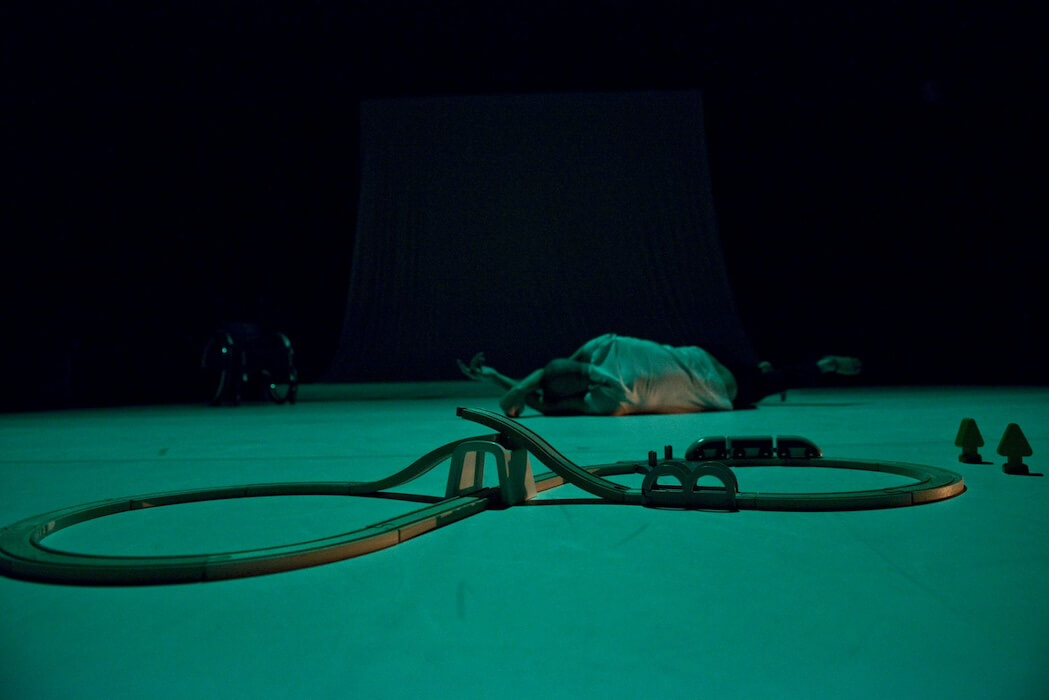
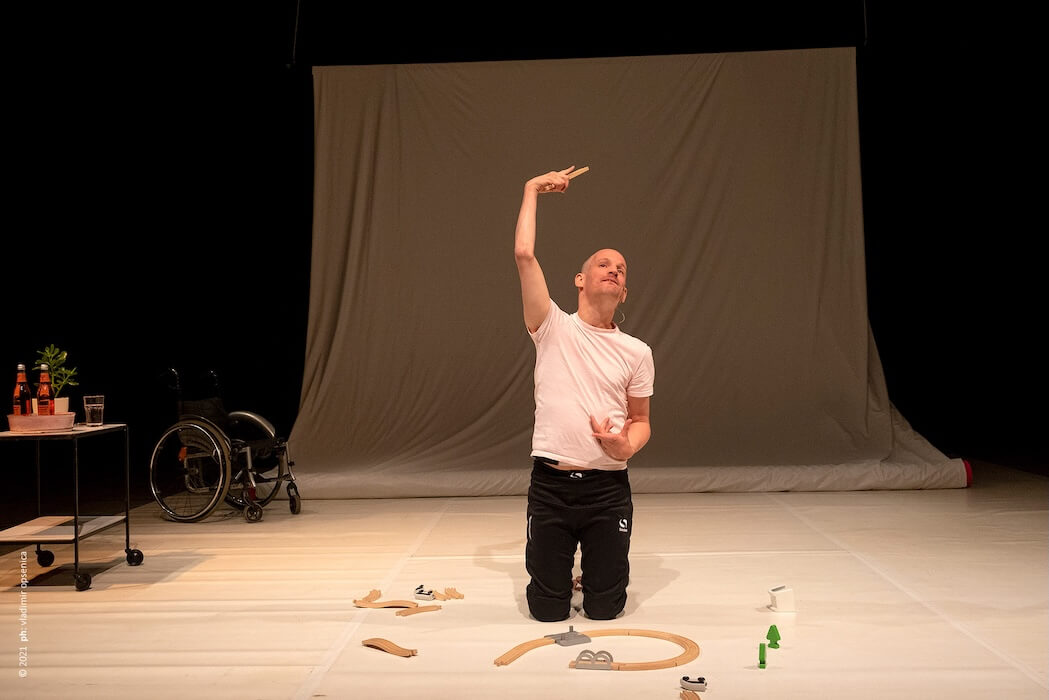
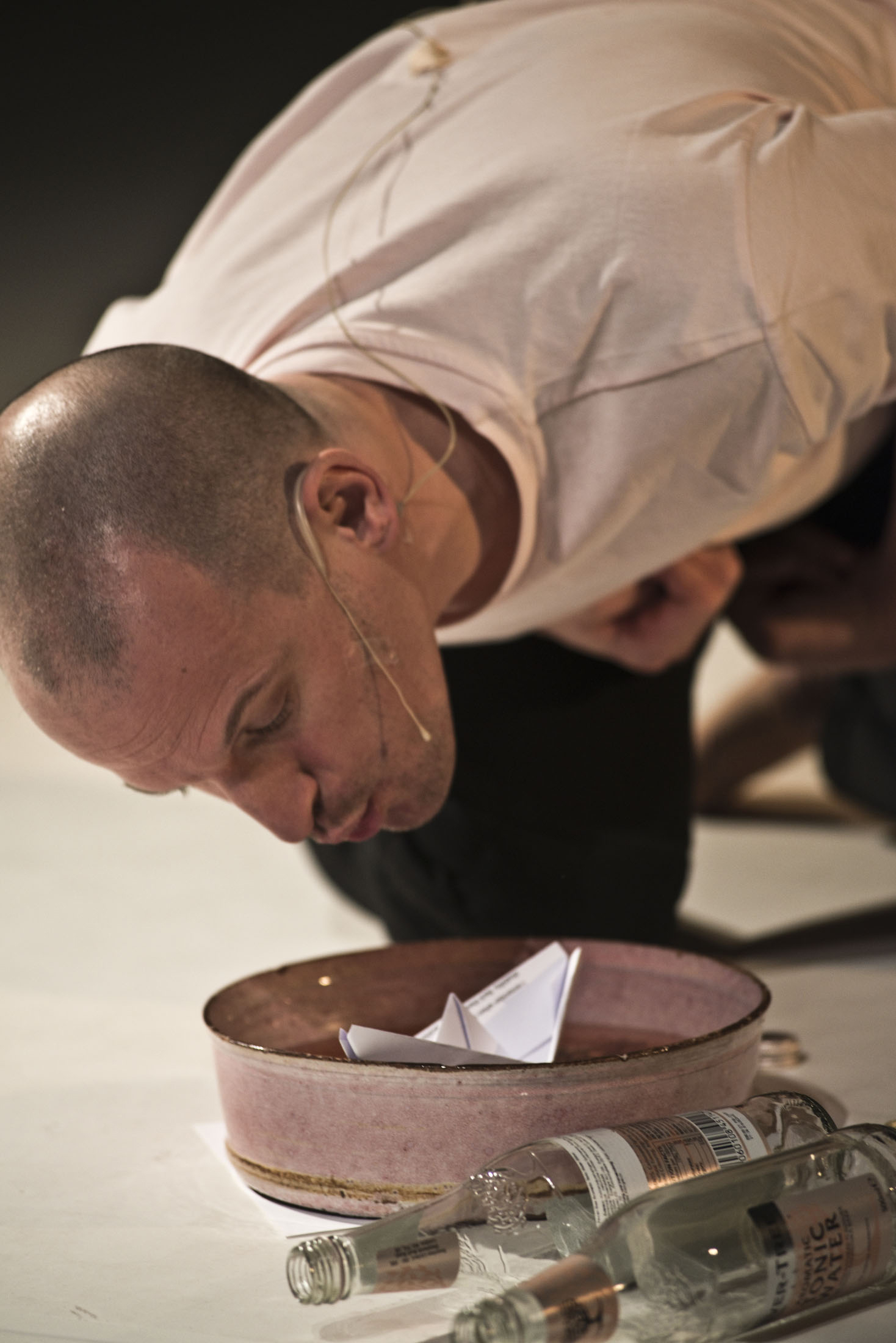
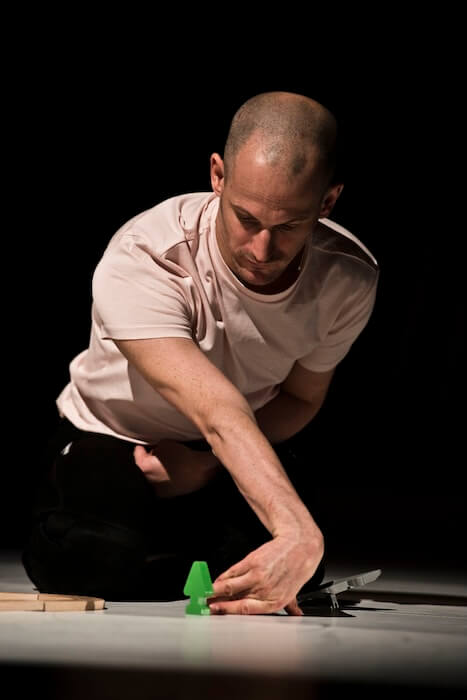
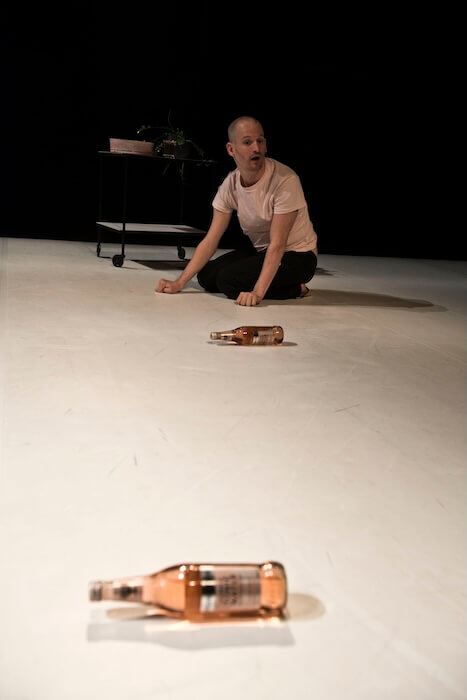
Seated in his wheelchair, Turinsky first pushes a trolley laden with bottles, a potted plant and tonic water. Sipping his gin without the tonic, he speaks eloquently, articulating his insights on disability and choreography. His tone is serious yet witty, his words satirical yet without bitterness. The balance between seriousness and humour is important to dispel any “tragic” image surrounding people with disabilities. Is this a dance? Turinsky transforms slow motion into movement, shifting between measured movements on the wheelchair and joyfully singing while circling the stage in a little sports car. Throughout this “dance”, he makes use of various toys to subtly satirise societal norms, subverting the dominant culture of speed and efficiency. Through his own mesmerising motions and resistance to prevailing daily rhythms, he rewrites the audience’s imagination of the body. He poses the question on behalf of the audience: But how does all that relate to choreography? “Modern dance pioneer Doris Humphrey defined choreography as ‘the art of creating dance’. For me personally, when I think of choreography, I tend to think about organisation. Choreography as a toolbox for organising mobility, mobilisation.” But wait a minute. If crip is all about resistance against mobilisation and if choreography is all about organising mobilisation, how do these go together? “Isn’t that a little bit like the gin without the tonic, the breakfast without the coffee?” Turinsky remarks, then speaks in earnest, “Perhaps it all hinges on how we can de-organise and re-organise our movements in such a way so that my movement can join your movement and so that we move on with joint forces.” This is the essence of breaking down barriers. So, this is ultimately more than a dance. Through slow, seemingly laborious movements, Turinsky physically embodies the state of precarious yet steadfast resistance. He rotates, rolls over, rises to his feet and returns to his wheelchair. In this sequence of “dance steps”, he lays bare the essential meaning of bodily movement with the ultimate inquiry: how can a crip body act with autonomy and flow with freedom? Since its premiere in 2021, Precarious Moves has toured extensively and was awarded Austria’s Nestroy Prize for Best Off-Production in the same year.
#ffffff 0
Artist Interview with Choreographer & Performer Michael Turinsky
1. Movements to Save the Planet

This is far more than a “Crip” dance. “On the surface, Precarious Moves is an autobiographical work, but its deeper meaning extends far beyond my personal experience, addressing some of the most pressing ideological and ecological issues of our time,” states the choreographer and dancer Michael Turinsky emphatically. The work originated from how Turinsky is very much invested in exploring the intersection between disability choreography and ecology: “In which ways could I, as a disabled choreographer, respond to the climate crisis that we all need to face? Soon, it became quite clear that the most obvious area of intersection between disability, choreography and ecology is actually ‘mobility’, or more precisely, the urgency of transforming the ways in which we move through this world.”

#ffffff 0
2. A Dance Manifesto on Mobility Justice

A graduate of the University of Vienna’s Philosophy Department, Turinsky coined the term “Crip Choreography”. His works are consistently infused with philosophical thought, touching upon contemporary dance, inclusivity, and even the political and aesthetic realms. In his creative process, he typically appropriates several ideas to construct a conceptual framework, and incorporates Gramscian perspective on art— viewing it as a critical force challenging popular culture and mainstream pursuits, such as the pursuit of speed.”

In a performance that intertwines “dance” with monologues, Turinsky subtly satirises human mobility and migration, the established and systematic organisations, and the relationship between the human body and the ecological environment. This elevates Precarious Moves beyond conventional dance theatre to be more akin to a manifesto. Within the text, the various concepts he references interplay with one another, prompting the audience to contemplate further through absurd comparisons: personal and collective, mobility and mobilisation, randomness and organization, body and environment, speed and slowness, and so on. “The piece attempts to open a space where audience members themselves can develop their own ‘creative process’ of making sense of the ideas presented in the performance.” Thus, he offers no definitive answers or definitions, leaving the audience to imagine through his poignant words and ambiguous physical movements.

#ffffff 0
3. Human Actions and Movements are Inherently Precarious

Turinsky’s movements are boldly precarious. The word “precarious”, denoting both instability and danger, not only alludes to his own physical state but also points to human movements at large, specifically the impact and potential harm humans cause to the natural ecosystem. “When humans move, they risk harming not only themselves but also the environment. The ‘we’ implies not merely ‘people with disabilities’ but all humankind. Ecologically speaking, humans may be the only species whose movements affect not just their immediate domain but the entire ecosystem. Human movements are inherently precarious.”

#ffffff 0
4. Anyway, I’m back in a second!

Slowness undeniably defines Turinsky’s rhythm. It is precisely within his body movements, suspended between motion and stillness, that visible and invisible barriers create an irresistible force of resistance. He describes these exploratory movements as a reinterpreting choreography through postures that deviate from convention. “For me, this basically means engaging the specific qualities of my own body in processes of de-organising and re-organising dominant forms of movement organisation, proposing how we could move differently, how we could relate differently to space as well as to time.” He is not sure if he could ever believe in something like organic movement, but what he does believe in is movement that is in tune with the needs of himself and others as organisms. One thing very clear is the movement attuned to the needs of himself and others as organisms—this is precisely what must be organised and it does not happen naturally.

During the performance, Turinsky repeated the phrase “I’m back in a second!” regularly. Was it a coded message or just a playful remark? Perhaps he was artfully constructing a sense of time and anticipation, hinting at the contradiction between bodily constraints and sustained movement. He leaves this open for interpretation, allowing the audience to speculate. Ultimately, he cast aside all tools, his body in states of flow, movement, and action. On a final note, he poses the question: “What do we actually long for when we long for freedom of movement?”

#ffffff 0
About the Artist
#ffffff 0
Has Border
False
Image
Photo of Michael Turinsky

Michael Turinsky

Michael Turinsky is a Vienna-based, physically disabled artist and theoretician, working at the intersection of contemporary dance and performance, disability, and political and aesthetic theory. Turinsky has worked in the world of inclusive dance since 2006, coining the term “crip choreography” for his unique practice of engaging the specific, resistant materiality of the body in processes of subverting and re-organising dominant forms and qualities of movement. He is also interested in the “aesthetics of access” and exploring the intricate relationship between dance and ecology. Turinsky’s main choreographic works include “Heteronomous Male”, “My Body, Your Plea sure”, “Reverberations”, “Precarious Moves” (Awarded the Nestroy Prize for Best Off-Production) and “SOILED”.

His commitment to teaching, education and theoretical practice has resulted in numerous workshops, lectures, interventions and publications within various contexts, and in 2024 Turinsky was named Outstanding Artist by the Austrian Ministry of Arts and Culture.
Creative and Production Team

Creative and Production Team

The table of Creative and Production Team
Position Team Member
Performance, Choreography, Text and Lyrics Michael Turinsky
Music and Lyrics Tian Rotteveel
Stage and Costume Design Jenny Schleif
Light Design Sveta Schwin
Photography and Videography Michael Loizenbauer
Dramaturgical Advice Gabrielle Cram
Production Manager Anna Gräsel

A production by Michael Turinsky, Verein fur philosophische Praxis Co-production by Tanzquartier Wien and HAU Hebbel am Ufer Supported by Stadt Wien and BMKOES

#ffffff 0
Photo
Photo Session - Precarious Moves photo 1
Photo Session - Precarious Moves photo 2
Photo Session - Precarious Moves photo 3
Photo Session - Precarious Moves photo 4
Photo Session - Precarious Moves photo 5
Photo Session - Precarious Moves photo 6
Has Border
False