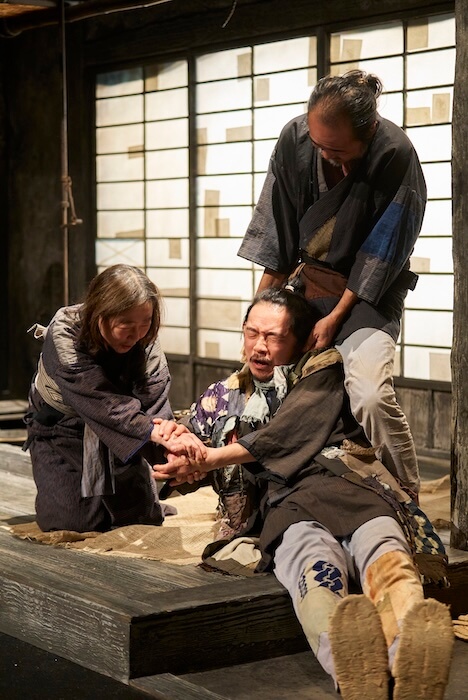
Two Blind Women in the Snowy Tokugawa Nights - Sleeping Fires by Kuro Tanino

Two Blind Women in the Snowy Tokugawa Nights - Sleeping Fires by Kuro Tanino

In-venue Programme

Date
27 March 2026 (Fri), 7:45pm*
28 March 2026 (Sat), 2:45pm* & 7:45pm
29 March 2026 (Sun), 12pm & 4:30pm

*Post performance Meet-the-Artist
Venue
Studio Theatre, Hong Kong Cultural Centre
Note
  • Approx. 105mins with no interval
  • Performed in Japanese
  • The performance contains smoke effects.
  • The performance contains scenes of near complete darkness.
  • The programme contains smoking, nudity and violence scenes.
  • Please switch off all sound-making and light-emitting devices.
  • Unauthorised photography or recording of any kind is strictly prohibited.
Accessibility Services
53
7
3
70
4
Subtitles and accessible captions in Chinese and English, audio description and caption reading in Cantonese and house programme in audio format available

In-venue Screening

Online Screening

#ffffff 0
About the performance

Our Eyes Can See, Only Our Hearts Are Blind

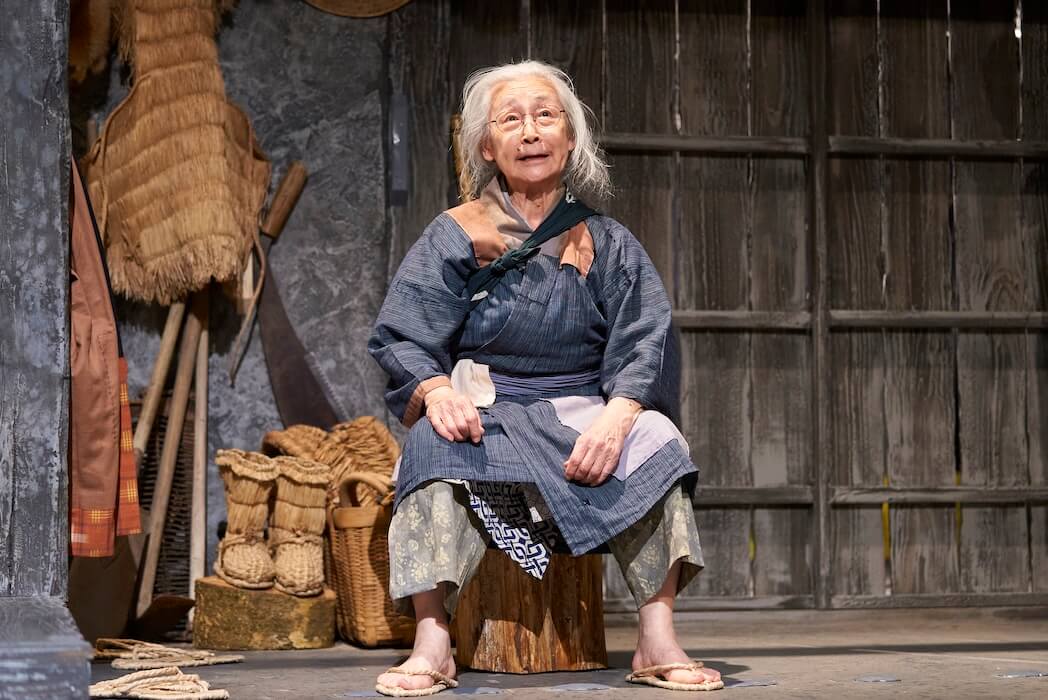
Two Blind Women in the Snowy Tokugawa Nights—Sleeping Fires is the third production for No Limits by renowned theatre director Kuro Tanino. Conceived by No Limits together with the director, it traces women’s pursuit of independence and emancipation amid the culture of blind massage therapy in Japan.

The story is set in the Tempō era of the Tokugawa period. During the era, massage therapy was a common occupation for people with visual disabilities. They entered the so-called Tōdōza system, an effort by the government to group blind people together and grant them the right to perform designated jobs, which, however, were made available for men only. This prompted Tanino to feature as the leads two female blind massage therapists who were excluded from the system.

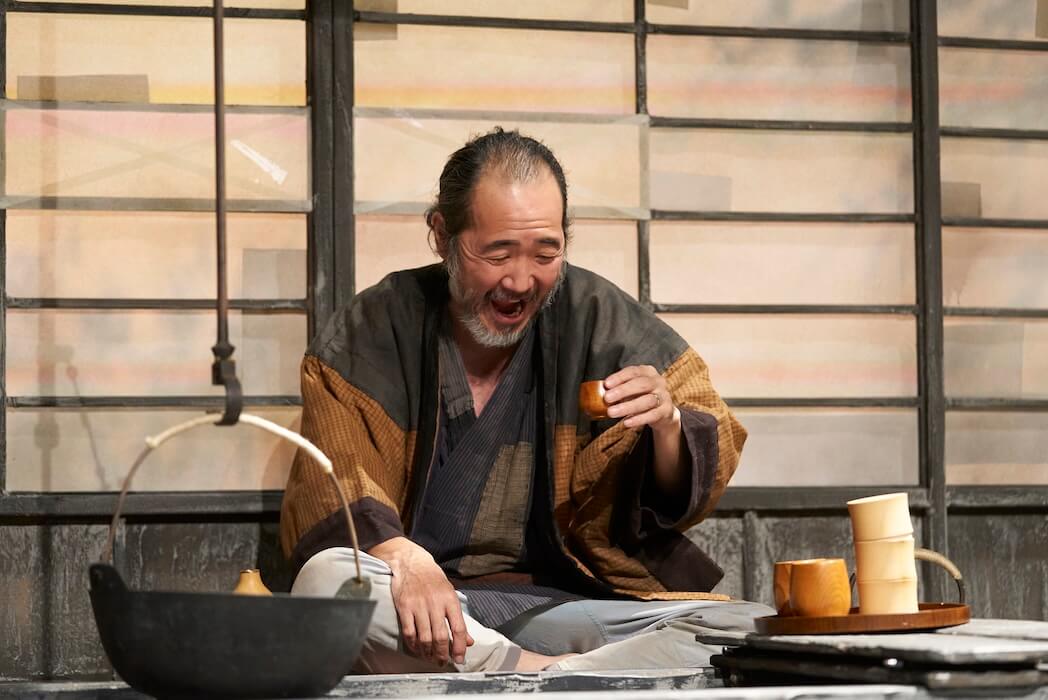
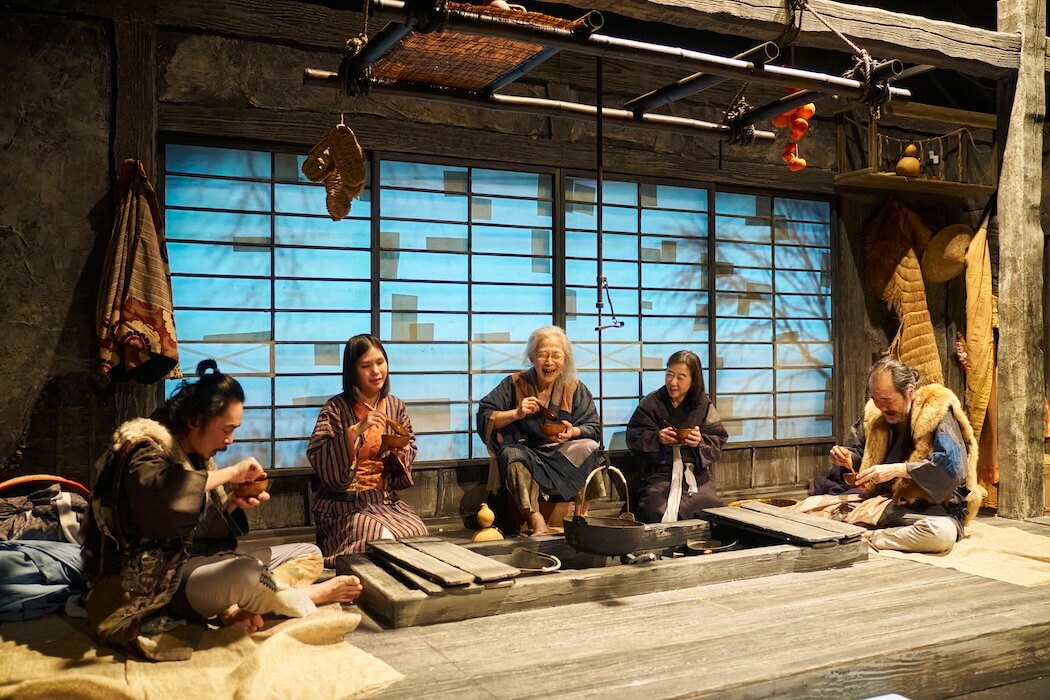
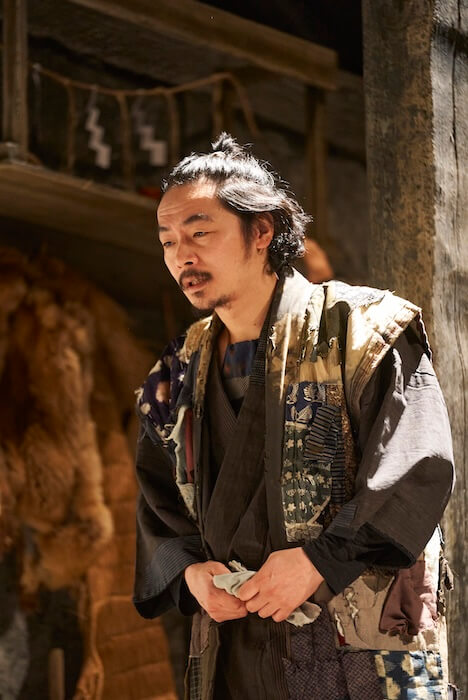
Despite the frigid weather, blind masseuse Iku and her man Mankichi enjoy a life of quietude in the mountains. With her hands, fingertips and an acute sense of touch, Iku reads people’s bodies and relieves not only their physical pains, but also wounds buried inside their hearts. One day, a young blind female performing artist named Saya shows up on her doorstep, asking to be taken on as an apprentice. While her hands glide across the skin, Saya begins to feel what her clients feel. She can even touch what lies deeper than the body—one’s hidden motives and true disposition. Beneath the chest are voices long suppressed; the flank is a muddle of confusion. As it happens, one’s bare hands can both heal and destroy. Meanwhile, Iku’s hands are reaching down into Saya’s dark past...When the sighted are actually blinded, only Iku can see all the love and hate inside Saya.

In Sleeping Fires, Kuro Tanino draws his cues from firsthand experiences of the visually impaired, shining a light on the lives of today’s blind people with a tale from the feudal age. Through the unspoken understanding between two blind women, the theatre piece brings to the fore the unbearable loneliness behind rage. After all, is it anger that blinds people to the truth? Or is it that humans can never tell illusions from reality? Cutting off from worldly affairs, leaving past hurts behind, living in the moment and being gentle to each other—could that be the path to peace and bliss? 
#ffffff 0
Artist Interview with Playwright and Director Kuro Tanino
1. Beyond Vision, How Do We Perceive Reality?

In Japan during the Edo period, men with visual disabilities had their rights protected under the privileged system of Tōdōza, earning their livelihood as shamisen players, acupuncturists or massage therapists. Women, on the contrary, were always left out. “Set in that era, Sleeping Fires is not just a period drama but a deliberation on how the world evolves thereafter, given such a context, and especially on what the future holds for women like the two protagonists,” says Kuro Tanino. Even though the modern way of living is different, what remains to be explored is how people coexist with each other. The director draws upon the past to contemplate the present: “How do visually impaired people navigate this world? From bygone eras to the present day, the nature of loneliness and hardships of survival have not changed much, have they?”

#ffffff 0
2. Breaking Free from a Self-Made Prison

Before writing the script, Tanino observed how people with visual impairments “see” the world by spending time with them. “During our interactions, I keep wondering: what exactly in this world are they ‘seeing’? What are they sensing? This is not a matter of just ‘seeing’ but where they place their attention, because the approach and nature of how they relate to the world are different from ours.” Tanino also indicates that these direct experiences soon gave him a direction, driving the narrative toward the theme of self-liberation. The story begins with the encounter between two female masseuses. One is a recluse living in the mountains, sensing others and the outer world with her hands; the other has her soul consumed by hatred—both struggling through love and hate in search of a way out. “Society imposes constraints everywhere. The protagonists, and we, nonetheless, all long for freedom. Such freedom, however, is not an outward display but a very personal journey of inner reflections. It has nothing to do with age or gender, nor is it merely about visual impairments; rather, it is about all forms of shackles in society.” The two blind women try hard to regain themselves, their quest for freedom mirroring the inner journey we all go through. In Tanino’s eyes, the seemingly dark ending of the revenge story is also a form of freedom—“for both the female and male characters in the story,” he adds, as long as one can escape from the societal framework and self-imposed prison.

#ffffff 0
3. A Shared Experience for the Audience and the Visually Impaired through Sound and Warmth

In the script, Tanino depicts our physical sensations such as touch and sound. He begins with how a masseuse feels and soothes other bodies with her hands. “Massage is a form of communication—not through words, but through the temperature of the skin, the strength of a push and its direction, and even the rhythm of breath.” He also describes natural scenery in fascinating detail, such as the sounds of raindrops in the deep mountains. “It is difficult for the audience and visually impaired people to share certain details in the narrative, so I deliberately created elements other than visual, such as birdsongs and the smell of hotpot. Such non-visual information gives the audience a better idea of the spatial setting and thus a deeper understanding.” The director works tirelessly to fine-tune the raining scenes on stage. The sound of water leaks in the house—whether rapid or slow, clear or vague, loud or small, or confined to one single spot. Such minute differences can impart a vast range of meanings and moods to a dramatic scene.
To achieve what he is after, Tanino rehearsed with visually impaired actors. The experience, as he recalls, was an ongoing process of deconstruction and reconstruction. “The physical attributes and performance styles of visually impaired actors are markedly different. Sighted people move their eyes when they are thinking, but blind people do not. During rehearsals, when the two actresses were targeting someone or something, it felt like while having to stay clear-headed, they were using their bodies to imagine and comprehend their surroundings. The aura they exuded had an agility to it. Their body language was so fascinating that it lent their performance a unique texture.” Tanino also maintains that they can easily sense the true nature of what is around them; and compared with their sighted counterparts, they are more attentive when “seeing”, whereas those whose eyes can see turn out to be “blind”. “This is something I wish to get across in my piece,” Tanino adds.

#ffffff 0
4. Comprehending Time through Touch

As the script reads: “All people are blind. We never manage to touch the truth.” These beings who cannot see entrust their hearts frivolously to the present moment. Tanino questions: “We only see what we want to see. We only hear what we want to hear. However, is what’s lying in front of you the reality or not?” The attempt to put vision aside and perceive through touch ultimately has something to do with the flow of time. “We look at the watch, we see our wrinkles in the mirror, and we see changes in people or the streets; thereby we ‘see’ time—all are in fact visual perceptions. Visually impaired people cannot see these; they cannot see time, and their understanding of time is worlds apart from ours. Theatre is essentially an art of time. It is my wish to present a piece not meant to be viewed with our eyes but to be felt with our body.” After all, he adds, “I have a feeling that Sleeping Fires will be a journey of self-discovery for me.”

#ffffff 0
About the Artist
#ffffff 0
Has Border
False
Image
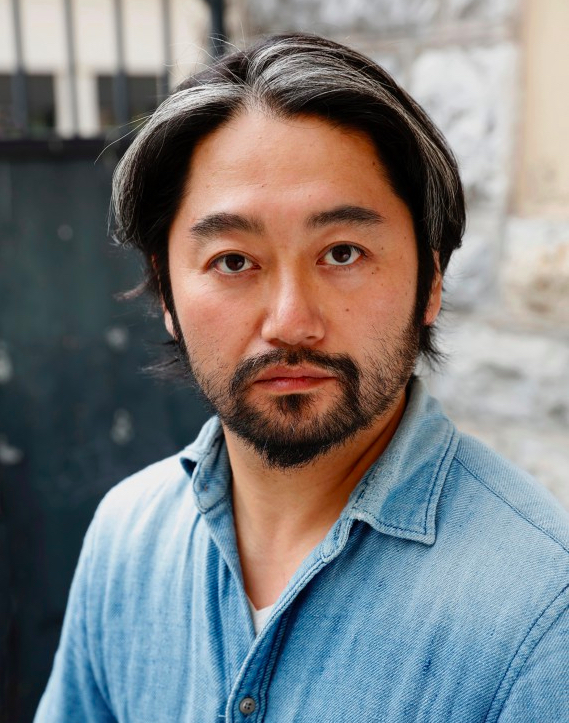
Photo of Kuro Tanino

Playwright & Director
Kuro Tanino

Kuro Tanino is the founder and director of Niwa Gekidan Penino, a playwright and former psychiatrist. In 2000, while still a medical student, he established Niwa Gekidan Penino and has since written and directed all of the company’s works. His productions have been invited to numerous major theatre festivals both in Japan and internationally, particularly in Europe. With Frustrating Picture Book for Adults (2008), Tanino and Niwa Gekidan Penino participated in the renowned 2009 HAU (Hebbel am Ufer) in Germany, Zürcher Theatre Spektakel in 2010. Tanino and Niwa Gekidan Penino were then invited to various festivals, including the Helsinki Festival, the Theatre der Welt and Vienna Festival, Paris Autumn Festival and more. In 2016, Tanino won the 60th Kishida Kunio Drama Award for Avidya: No Lights Inn. The same year, he was awarded the Kita Nippon Shimbun Arts Prize and the Grand Prize of the 71st ACA National Arts Festival. He received the 36th Toyama Award for Culture and Arts Category in 2019. In 2022, he was appointed Policy Advisor for the City of Toyama. In 2024, he served as a jury member for the Kishida Kunio Drama Award.
#ffffff 0
Has Border
False
Image
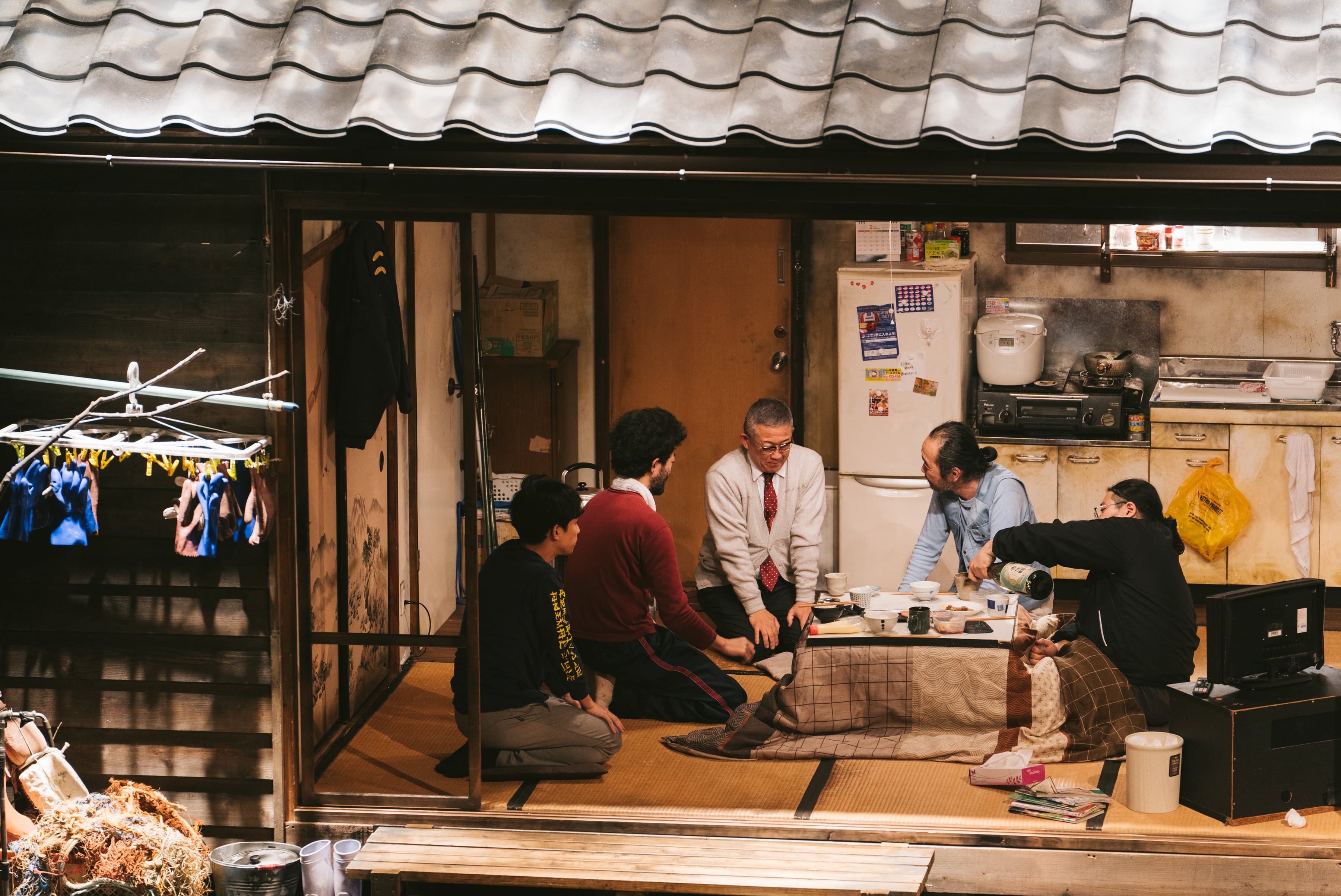
Photo of Niwa Gekidan Penino

Niwa Gekidan Penino

Niwa Gekidan Penino is a theatre ensemble and the brainchild of Kuro Tanino during his student days at Showa University in 2000. Niwa Gekidan Penino has shared its intricate artistry and distinct vision of the world through its works. The theatre company is known for its keen attention to the performance space. From 2009 onwards, the group has been invited to numerous performing arts festivals at home and abroad, and has ventured into virtual reality in recent years through the works.

Creative and Production Team

Creative and Production Team

The table of Creative and Production Team
Position Team Member
Curator Eddy Zee (No Limits)
Produced by Niwa Gekidan Penino
Playwright and Director Kuro Tanino
Music Director Yu Okuda
Performer Susumu Ogata, Rio Sekiba, Takao Shibata, Natsue Hyakumoto , Ineko Kawai
Company Manager Chika Onozuka
Stage Manager Masaya Natsume
Stage Designer Michiko Inada
Lighting Designer Masayuki Abe
Sound Designer Koji Sato
Costume Designer Mariko Tomoyoshi
Video Operator Azusa Saito
Subtitle Operator Saki Sahara
Director Assistant Hatsune Sakai
Stage Manager Assistant Hikari Kitano
Lighting Assistant Miho Akutsu
Trailer Production Takahiro Kaminokado

Finale Music Production

The table of Finale Music Production
Position Team Member
Composers Yu Okuda, Tomotaka Sekiya
Nohkan Suiho Tosha
Bass Tomotaka Sekiya
Drums Yukino Matsuura
Shamisen Music Performed by Isosuke Kineya
Photo
Photo Session - Sleeping Fires 1
Photo Session - Sleeping Fires 2
Photo Session - Sleeping Fires 3
Photo Session - Sleeping Fires 4
Photo Session - Sleeping Fires 5
Photo Session - Sleeping Fires 6
Photo Session - Sleeping Fires 7
Photo Session - Sleeping Fires 8
Photo Session - Sleeping Fires 9
Photo Session - Sleeping Fires 10
Photo Session - Sleeping Fires 11
Has Border
False